Environmental calculator washroom

Reduce your washroom environmental footprint


Choosing Elis reusable cotton solution enables to save each year:
Find out more about the results
The figures come from the comparative LCA "Drying a pair of hands with cotton versus paper ". The LCA went through a critical review process in line with ISO 14071 requirements. Peer board was LCA expert.
These results are based on drying one pair of hands.
On climate change, cotton scenario has a lower impact of 60%. More detailed impacts are described above. Cotton requires about 2,5 more water than paper but more than 95% is due to the raw material. Elis is engaged to use the cotton roll as long as possible to reduce this impact. Especially, at Elis, cotton rolls are repaired. To expand the lifespan and reduce the impact, high quality products are selected and cotton rolls are repaired. Additionally, some cotton rolls are dyed in blue to have a second life. This second life was not accounted for into the study and is likely to even improve the environmental benefits of the reusable solution.
Finally, Elis works on recycling more and more its textile (about 80% recycling at end of 2030).
Main assumptions:
- Cotton towel rolls are used many times, they are washed in an industrial laundry and delivered to customer.
- For paper towel solution both paper towel rolls and folded paper were considered and an average was taken.
Methodology: ISO 14040, 14044, Environmental Footprint 3.1 method.
Database: Ecoinvent 3.11, PEFCR 3.1 and Elis specific data.
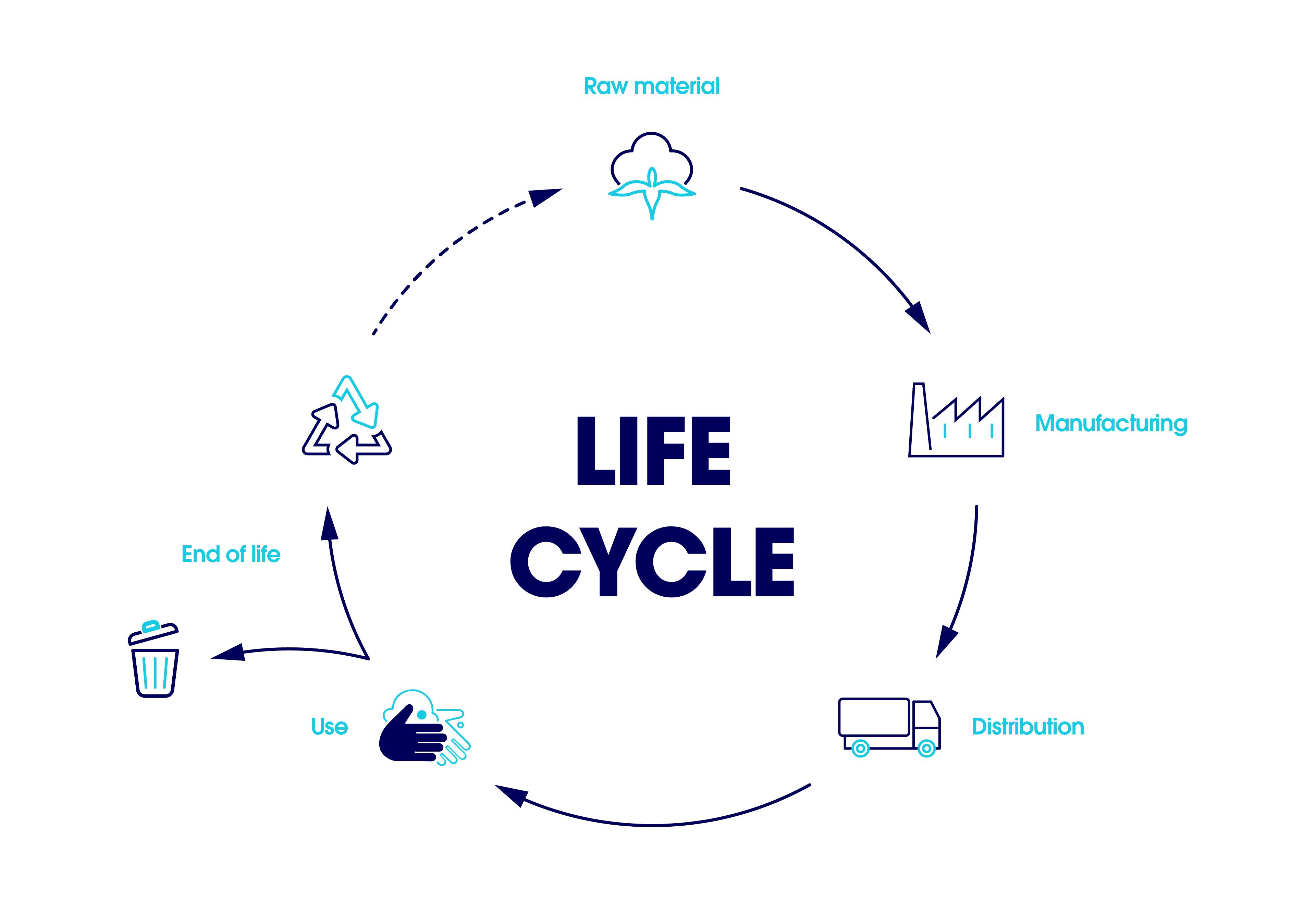
Steps analysed in the LCA
environmental impact reduction
The results include the full life cycle of the dispenser and the paper/cotton towel roll from raw material to end of life, including the washing process for the reusable solution.
They are based on a LCA study done according to ISO 14040 and 14044 that went through a third-party review.
Elis, a leader in circular services, allows businesses to achieve optimal hygiene and protection for their employees and customers.
Elis offers its clients products that are maintained, repaired, reused, and reemployed to optimize their usage and lifespan. Elis’ conviction is that the circular economy model, which notably aims at reducing consumption of natural resources by optimizing the lifespan of products, is a sustainable solution to address today’s environmental challenges. The services offered by Elis represent a sustainable alternative to the simple purchase or use of products or to single-use disposable products. More than 80% of the Group turnover is based on the product as service business model.
Elis carried out a comparative Life Cycle Analysis (LCA) covering the full life cycle of cotton roll and paper towel solutions to dry hands.
The dispenser and the consumables were included in the study.
The results come from the comparative LCA « Drying a pair of hands with cotton versus paper ». The LCA has been reviewed by an independent LCA expert and went through a critical review process in line with ISO 14071 requirements. Peer board members were LCA experts.
Methodology: ISO 14040, 14044, Environmental Footprint 3.1 method
Database: Ecoinvent 3.11, PEFCR 3.1, ADEME and Elis specific data.
If you need information or a quote for your project, our teams are here to help. Contact us!
*Required fields
Account details